Klaus Hart Brasilientexte
Aktuelle Berichte aus Brasilien – Politik, Kultur und Naturschutz
Brasilien, Geldfußball-WM 2014. Führende Homosexuellenorganisation des Tropenlandes protestiert gegen Präsenz der Iran-Mannschaft in Salvador da Bahia, eröffnet Ausstellung: „Iran – Hölle für Homosexuelle“. Brasilien mit Mord-Rekord bei Homosexuellen.
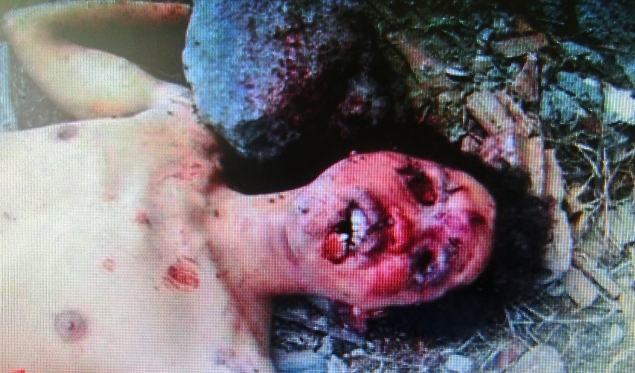
Ausriß: Zu Tode gesteinigter Homosexueller in Brasilien, laut Landesmedien. (Stands in Ihrem Lieblingsmedium?) Interessanterweise schweigen Mitteleuropas tonangebende Medien weiterhin zur Lage der Homosexuellen in Brasilien, zur steigenden Zahl von “Haßverbrechen” gegen Schwule.
Außenminister Guido Westerwelle in Sao Paulo: ”Unsere Partnerschaft gründet sich auf ein solides Fundament: Auf gemeinsame Werte und eine enge kulturelle Verbundenheit. Wir teilen die gleichen Vorstellungen von der Freiheit und Würde des Einzelnen, von Demokratie, Rechtsstaatlichkeit und sozialer Marktwirtschaft, von Multilateralismus und der Geltung des Völkerrechts.”

Ausriß. Transvestit in Bahia ermordet. “Epidemie des Hasses”.
Brasiliens Landesmedien berichten regelmäßig in Wort und Bild über sadistische Haß-Verbrechen an Homosexuellen – auch in Deutschland sind die Fälle bei zuständigen Stellen, Politikern, NGO bestens bekannt – indessen haben diese offenkundig keinerlei Anlaß für Reaktionen gesehen. Dies läßt zahlreiche Rückschlüsse zu.
Die deutsche Bundeskanzlerin Angela Merkel war bereits zum Eröffnungsspiel der deutschen Mannschaft in Brasilien: http://www.hart-brasilientexte.de/2014/06/16/deutsche-bundeskanzlerin-angela-merkel-reist-zur-wm-2014-nach-brasilien-trotz-gravierender-menschenrechtslage-bei-treffen-mit-staatschefin-dilma-rousseff-in-brasilia-waren-schwere-menschenrechtsve/
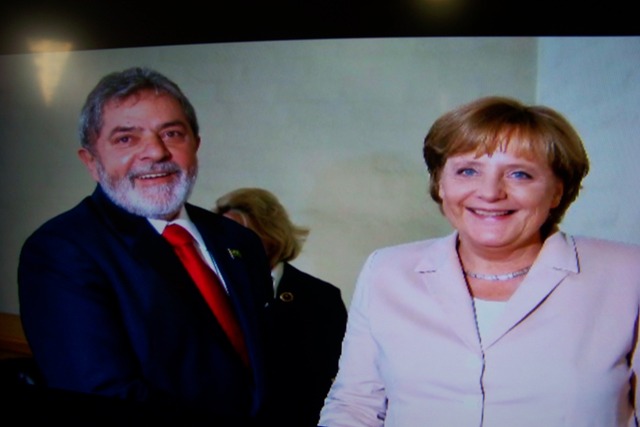
Warum Lula in Ländern wie Deutschland viele Sympathisanten eines bestimmten politischen Spektrums hat – Lula war Informant der Diktatur-Geheimpolizei Dops, laut neuem Buch: http://www.hart-brasilientexte.de/2014/02/12/brasilien-die-folterdiktatur-lula-und-die-arbeiterpartei-pt-rufmord-ein-kapitalverbrechen-buch557-seiten-mit-schweren-vorwurfen-gegen-lula-macht-schlagzeilen/
Brasilien, Geldfußball-WM 2014. Mindestens 25 Staatschefs bei Endspiel in Rio am 13. Juli, laut amtlichen Angaben.
Wie es hieß, habe der bisherige WM-Verlauf, ohne die erwarteten starken Straßenproteste, viele Staatschefs bewogen, kurzfristig die Einladung von Brasiliens Präsidentin Dilma Rousseff anzunehmen.
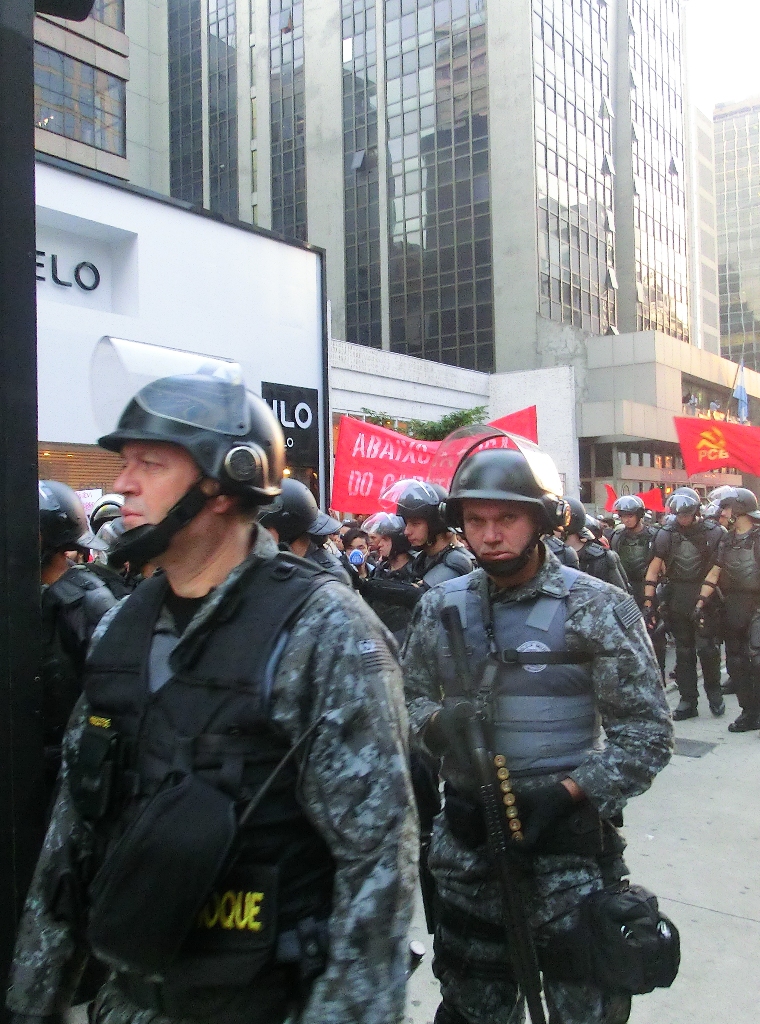
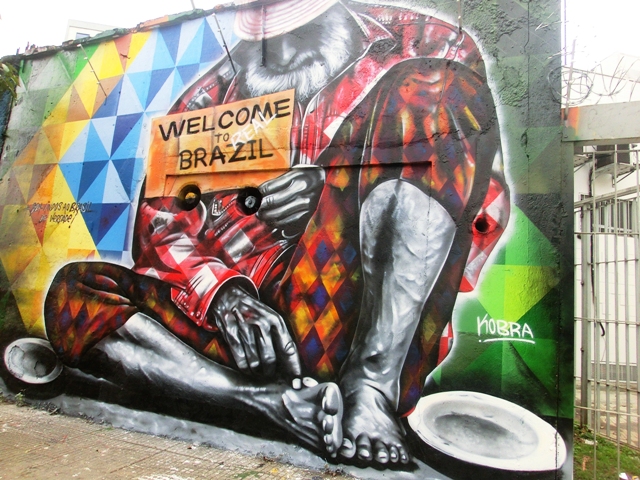
Wandmalerei in der City von Sao Paulo.
Die deutsche Bundeskanzlerin Angela Merkel war bereits zum Eröffnungsspiel der deutschen Mannschaft in Brasilien: http://www.hart-brasilientexte.de/2014/06/16/deutsche-bundeskanzlerin-angela-merkel-reist-zur-wm-2014-nach-brasilien-trotz-gravierender-menschenrechtslage-bei-treffen-mit-staatschefin-dilma-rousseff-in-brasilia-waren-schwere-menschenrechtsve/
Warum Lula in Ländern wie Deutschland viele Sympathisanten eines bestimmten politischen Spektrums hat – Lula war Informant der Diktatur-Geheimpolizei Dops, laut neuem Buch: http://www.hart-brasilientexte.de/2014/02/12/brasilien-die-folterdiktatur-lula-und-die-arbeiterpartei-pt-rufmord-ein-kapitalverbrechen-buch557-seiten-mit-schweren-vorwurfen-gegen-lula-macht-schlagzeilen/
Brasilien, Geldfußball-WM 2014: „Repressing World Cup Protests — A Booming Business for Brazil“. Commondreams. Methoden der Paralysierung von Protestpotential in Brasilien – die Slum-Diktatur.
https://www.commondreams.org/view/2014/06/21-1
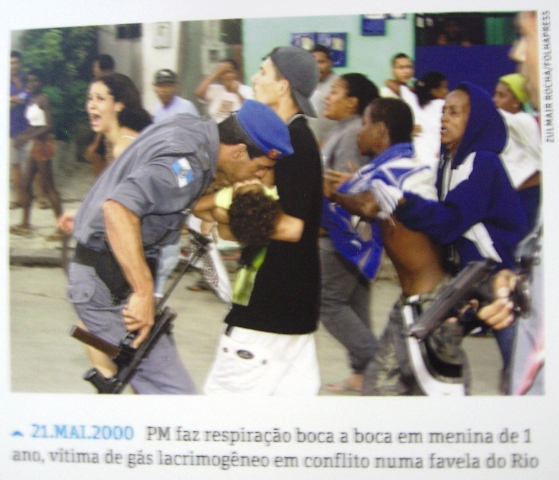
Polizist in Rio macht Mund-zu-Mund-Beatmung bei einjährigem Kind, Opfer von Tränengas in Favela – Ausstellungsfoto der “Folha de Sao Paulo” in Sao Paulo 2012, Ausriß.
Slum-Diktatur: http://www.hart-brasilientexte.de/2008/02/15/wem-nutzen-banditendiktatur-und-immer-mehr-no-go-areas/
Published on Saturday, June 21, 2014 by Waging Nonviolence
Repressing World Cup Protests — A Booming Business for Brazil
 A tear gas canister made by Rio-based Condor Nonlethal Technologies found on the streets of Ankara, Turkey in 2013. (Twitter/Suzette Grillot)On June 12, Brazilian police fired tear gas on a group of 50 unarmed marchers blocking a highway leading to the World Cup arena in São Paulo. On June 15 in Rio de Janeiro another200 marchers faced floods of tear gas and stun grenades in their approach to Maracana stadium. Armed with an arsenal of less lethal weapons and employing tactics imported from U.S. SWAT teams in the early 2000s, police clad in riot gear are deploying forceful tactics, wielding batons and releasing chemical agents at close range. In Brazil, this style of protest policing is not only a common form of political control, but also a booming business.
World Cup and related economic protests occurring across the country are bringing in big profits for Rio-based company Condor Nonlethal Technologies. As part of the World Cup’s massive security budget Condor scored a $22-million contract, providing tear gas, rubber bullets, Tasers and light and sound grenades to police and private security forces. Selling riot control and public order weaponry to law enforcement, military and United Nation buyers, Condor’s business has grown by over 30 percent in the past five years.
Events like the World Cup and Olympic Games — also to be hosted by Brazil in 2016 — shine a spotlight on national security. Perform well, in the eyes of the industry, and receive invitations around the world for keynote speeches, consultancies and training operations. For Condor and the broader Brazilian security sector, the World Cup is like a fashion week; it is an opportunity to showcase the latest police gear, baiting future buyers.
While Condor will not officially divulge details of its profits, according to the curriculum vitae of its Marketing Director, the company has international sales of $50 million of non-lethal weapons and ammunition. In recent years Condor has seen an increase in its revenue of 33 percent as a result of a new marketing strategy engaging communication tools and trade show participation. With these initiatives the marketing director has overseen an average sales growth of 90 percent and has increased sales from 12 countries to over 40, with new markets in Asia and Africa.
Profiting off protests abroad
Under giant banners of the Brazilian flag, Condor is now a regular exhibition stall holder at the world’s leading internal security expos, including DSEi and Milipol, where they show off their wares to government and military buyers. Such new devices on display include the “ballerina grenade,” which jumps on the ground to avoid “throwback” by protesters.
Condor’s large range of riot control technologies are shipped abroad to hundreds of cities around the world, including to countries with documented human rights abuses. This behavior has led to scrutiny of Condor’s 2010 promise to be a “pioneer in the dissemination of the ‘Non-Lethal’ concept in Brazil… through the controlled use of the escalation of force, without any harm to human rights.”
All international sales of tear gas in Brazil go through Brazil’s Ministry of External Relations and the Ministry of Defense. However, they do not keep a record of how they are used and sales figures aren’t made public. According to a report by investigative journalist groupPublica, “In this industry, the norm is a lack of transparency.”
Despite their increased use as a deadly force, “riot control” remains exempted from the Chemical Weapons Convention that permits toxic gases to be deployed against civilians. Like other weapons that can be classified as policing equipment, these agents often fall outside of arms sales restrictions. This leaves their for-profit trade even less regulated than the pharmaceuticals industry.
Building Brazil’s riot control business
Brazil’s rise to the top of the international protest policing industry is largely the result of the country’s relaxation of rules around arms sales in the early 2000s. In 2002 the Brazilian government put forward a new set of flexible policies to increase national revenue. The Ministry of Defense collaborated with “Foreign Affairs (Itamaraty), Science and Technology and those in the economic area,” according to the Sao Paulo Gazeta Mercantil. Frederico Aguiar, then-president over Condor’s contracting and sales, said “There is an increasing awareness that a country as politically and economically important as ours cannot remain dependent on defense systems designed and produced abroad.”
Alongside this move to increase the production of police technologies, came changes to policing practices. According to a report by Cirro Barros of Publica, in 2004 Brazil established the Força Nacional to deal with public security emergencies, forming part of a wider plan to expand military training for public order policing.
In 2006, Condor and the Brazilian government jointly hosted what was at the time the largest less lethal weapons conference in the world, catapulting them onto the international stage. Speakers included U.S. military expert Colonel John B. Alexander — of “The Men Who Stare at Goats” and UFO fame — as well as Charles “Sid” Heal, a man central to the development of military tactics for policing. Said to have “written the bible on SWAT,” Commander Heal provided consultancy for Condor as the company expanded its for-profit pursuit of the protest policing and “peacekeeping” markets. Recent investigations by Publica reveal continued U.S. involvement in the militarization of Brazilian police, with FBI consultations and trainings conducted in centers funded by the U.S. State Department.
Evading accountability
While the Brazilian government points to its policies to evade blame, corporate manufacturers like Condor remain protected behind warning labels, despite the increasingly abusive deployment of their products. In recent years Condor’s technologies have been repeatedly used against protocol to intentionally increase harm and even systematically torture people inTurkey, Bahrain and Egypt. “We always advise the right escalation of force,” promises Beni Iachan, a senior business analyst for Condor. Such advice legally allows manufacturers like Condor to avoid accountability, while supplying governments and their police with ever more methods for violently escalating force.
While Condor’s revenue soars, around the world the company’s canisters, grenades and rubber bullets continue to be fired at close range at people’s heads and upper bodies. Devices are launched into enclosed spaces, reaching deadly levels of toxicity. And expired chemical agents bearing the Condor brand are being used against civilians, most recently documented on the streets of Venezuela.
As accounts of riot control deaths and injuries pile up, it is becoming increasingly difficult for companies like Condor to cling to the “nonlethal” in their corporate name. Along with local activists, Brazilian human rights campaign group Tortura Nunca Mais, or Torture Never Again, and investigative journalists at Publica are working hard to raise public awareness around the role of these weapons in police abuse and the need for increased accountability.
Exposing links between government and corporate protest profiteering, Publica is currently mapping out Condor’s influence on government agencies. “We recently discovered that Condor has an exclusivity deal made by the Brazilian Defense and Security Industries Association,” explained Bruno Fonseca, an investigative reporter at Publica. “That means all public defense and security public institutions, such as the Brazilian police, may purchase without a government procurement process.”
This allows hundreds of thousands of Condor weapons to be put in the hands of Brazilian security forces without government oversight. “Condor has exclusivity for 27 types of non-lethal equipment,” said Fonseca. The Brazilian government’s use of excessive force and failure to regulate their riot control practices are now under scrutiny by Amnesty International’s global campaign, Give Them A Yellow Card, which is monitoring the repression of peaceful protest during the World Cup.
With all eyes now on Brazil — and its protesters — it’s time to not only resist the repression of protest rights, but also to confront the business incentives that fuel the escalation of force. “Corporations around the world like Condor see this as an opportunity to make a profit — and they are absolutely profiting off of state repression,” said Kimber Heinz of the global Facing Tear Gas campaign.
Unmasking who profits off world protests reveals the intersections of governmental control and big business, pointing to new targets for campaigning and nonviolent direct action. “Militarism is a global project with local implications,” explained Heinz. “Our campaign work targets the engines of militarization: training sites, weapons expos and government programs, building a base of opposition to militarism and policing from the grassroots.”
This work is licensed under a Creative Commons 4.0 International License.

Anna Feigenbaum is a lecturer in Media and Politics at Bournemouth University currently working on book about the history of tear gas.
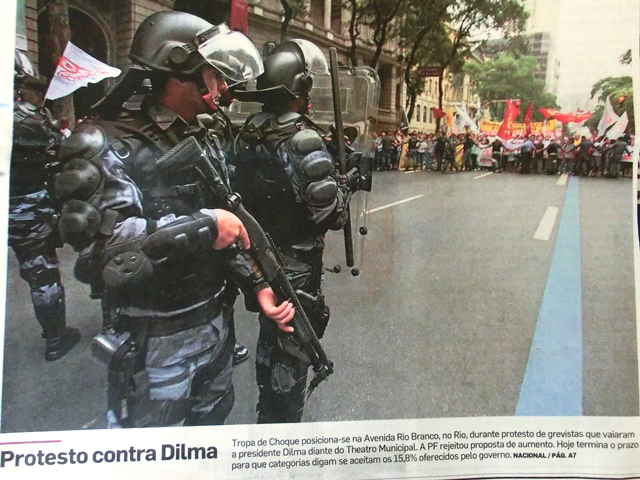
Ausriß, Rio de Janeiro.

Tränengaseinsatz gegen demonstrierende Systemkritiker vor der Kathedrale von Sao Paulo – das brasilianische Gas erweist sich als außerordentlich effizient.
Ukraine-Krieg 2014 und Konsequenzen. „Kiev nationalists clash with police outside Orthodox monastery“. Ukraine-Krieg und Kriegsverbrechen Kiews, Beispiel Luhansk…
Beeindruckende neoliberale Herzenskälte in Deutschland gegenüber dem Leiden der ostukrainischen Bevölkerung – war es so unter Adolf Hitler? Behinderte Ostukrainer sogar im Rollstuhl ermordet.
Opfer der Kiewer Terrorangriffe – Video.
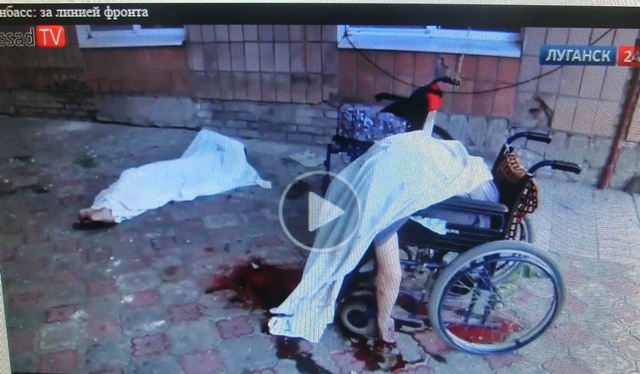
Video anklicken:
http://voicesevas.ru/news/yugo-vostok/9574-donbass-za-liniey-fronta.html
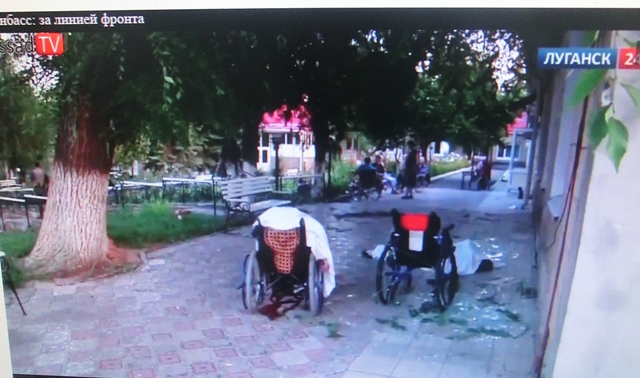
Ausriß, Kriegsverbrechen der Kiewer NATO-Marionetten. Deutsche Autoritäten positionieren sich nicht zu solchen gravierenden Menschenrechtsverletzungen. Warum das deutsche Fernsehen solche Kriegsverbrechen nicht zeigt.
Deutsche Verteidigungsministerin von der Leyen:http://www.hart-brasilientexte.de/2015/02/06/deutsche-verteidigungsministerin-von-der-leyen-aeussert-sich-in-tagesschau-interview-nicht-zu-nato-waffen-finanz-und-soeldnerhilfe-an-die-marionettenregierung-in-kiew-kein-wort-zu-verdeckten-cia-op/
Auch Angela Merkel hat bisher zu den Kriegsverbrechen Kiews nicht Stellung genommen…
Kriegsverbrechen Luhansk: http://www.hart-brasilientexte.de/2014/06/03/ukrainische-luftwaffe-feuert-20-raketen-auf-lugansker-gebietsverwaltung-ab-putschregierung-in-kiew-dementiert-luftangriff/
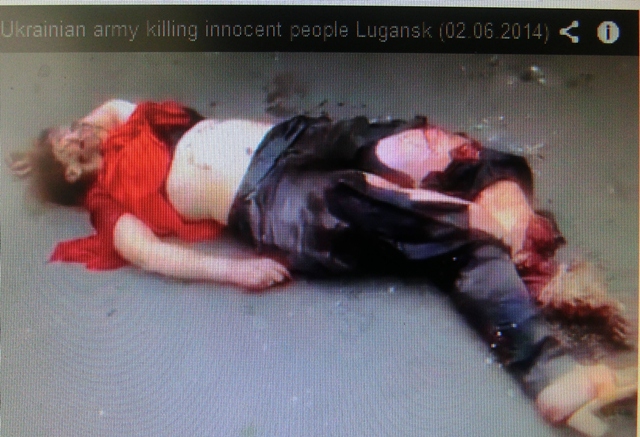
Ausriß. Nach dem Odessa-Massaker die SS-Methoden von Lugansk…
Kiev nationalists clash with police outside Orthodox monastery (PHOTOS, VIDEO)
Published time: June 23, 2014 01:52

Kiev, June 22, 2014. (AFP Photo / Sergei Supinsky)
FacebookTwitterRedditStumbleUponGoogle+Tumblr
Trends
Tags
Clashes, Politics, Rally, Religion, Security,Violence
Ukraine nationalists have clashed with police outside the citadel of the Orthodox Church in Kiev, the Pechersk Lavra, as the churchgoers and monks were about to hold a peace service praying for an end to violence in Ukraine.
According to various media reports up to 500 ultra-nationalists, representing the Right Sector and Ukraine’s Patriots neo-nazi movements, clashed with around 100 policemen in an attempt to disrupt the Procession of the Cross at one of the centers of the Eastern Orthodox monasticism in Eastern Europe.
The procession was supposed to start at noon local time in the Holy Dormition Cathedral of the Kiev-Pechersk Lavra and end up at the monument of the Unknown Soldier. Participants in the rally, mostly elderly, oppose Kiev’s military operation in the Donetsk region.
Ultra-nationalists claimed that “separatists” were planning to use the event as a chance to gather and form a “Kiev’s People Republic” and used a “few dozen grandmas” to disguise their plan.
After the armed ultra-nationalist crowd arrived at the gates of the convent, the Lavra was forced to shut fearing clashes.
“After the crowd of activists with baseball bats and hammers, some wearing bulletproof vests arrived at the Lavra, the entrance and exit to the shrine was closed. According to law enforcement, this was done to avoid clashes,” spokesman for Ukrainian Orthodox Church, Fr. Georgiy Kovalenko shared his account of the events surrounding the procession service on his Facebook page.
The clergy asked the angry mob – some of whom claimed they came to the monastery “to pray” – to lay down their arms. But when asked to cite a prayer, according to Kovalenko, they could not remember a single one.
Around 250 people, some wearing St. George’s ribbons, were forced to seek shelter and hold the procession inside the walls of the monastery, while around 100 law enforcement officers secured the premises. It is still unclear how many people were injured in the clashes outside the walls of the monastery.
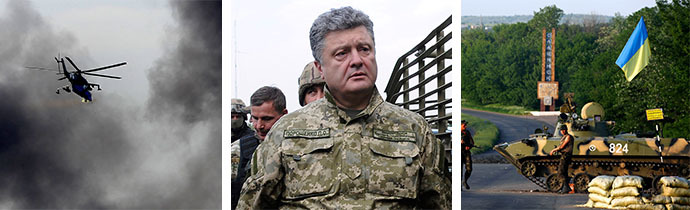
READ MORE: POROSHENKO WARNS OF ‘DETAILED PLAN B’ IF UKRAINE CEASEFIRE FAILS
Kiev Pechersk Lavra issued a statement after the incident saying that according to Appeal Holy Synod, the Ukrainian Orthodox Church “as always calls on all parties to the peaceful resolution of conflicts and enhanced prayer.” It reminded that the monastic life should not be disturbed or used for political purposes.
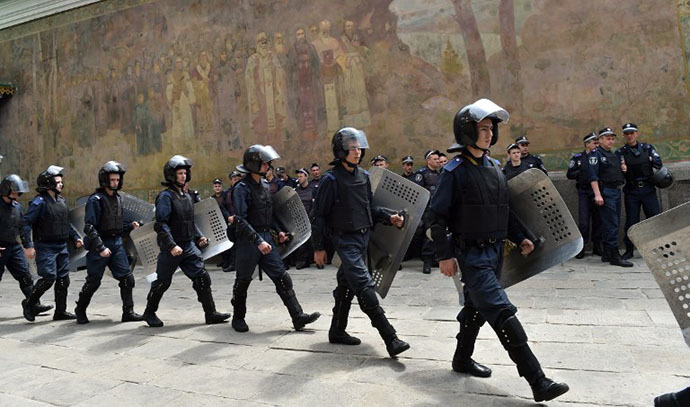
Policemen guard the entrance of the Kiev Pechersk Lavra, an Orthodox Christian complex of monasteries and cathedrals in Kiev, to prevent storming by activists of various pro-Ukrainian radical youth groups on June 22, 2014. (AFP Photo / Sergei Supinsky)
After the raid on the monastery around 60 nationalist activists staged a rally at the Russian embassy in Kiev, Russia’s Press Atache Oleg Grishin said.
“The gathered are behaving aggressively. They are trying to break through the cordon of the consulate building, stoning representatives Ukrainian law enforcement agencies,” RBK quoted Grishin. “The situation is tense,” the diplomat added. No one was detained at the rally that lasted around two hours.

Activists of various pro-Ukrainian radical youth groups sing the anthem as policemen guardthe entrance of the Kiev Pechersk Lavra, an Orthodox Christian complex of monasteries and cathedrals in Kiev, to prevent storming by activists of various pro-Ukrainian radical youth groups on June 22, 2014. (AFP Photo / Sergei Supinsky)
Also on Sunday, the nationalists vandalized a Kiev branch of Russia’s Sberbank pelting cobble stones and throwing firecrackers inside.

Policemen guard the Sberbank of Russia building after it was attacked with stones by activists of various pro-Ukrainian radical youth groups in Kiev on June 22, 2014. (AFP Photo / Sergei Supinsky)

Ukrainian policemen guard the entrance of Kiev Pechersk Lavra, an Orthodox Christian complex of monasteries and cathedrals in Kiev, to prevent storming by activists of various pro-Ukrainian radical youth groups on June 22, 2014. (AFP Photo / Sergei Supinsky)

Activists of pro-Ukrainian radical group wave a Ukrainian national flag during a rally outside the Consulate department of Russian embassy in Kiev June 22, 2014. (Reuters / Valentyn Ogirenko)
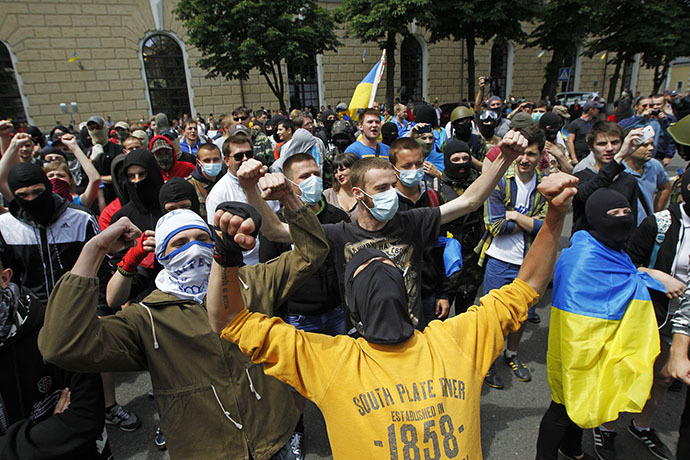
People with their faces covered take part in a pro-Ukrainian anti-separatist rally near Kiev Pechersk Lavra, in Kiev June 22, 2014. (Reuters / Valentyn Ogirenko)
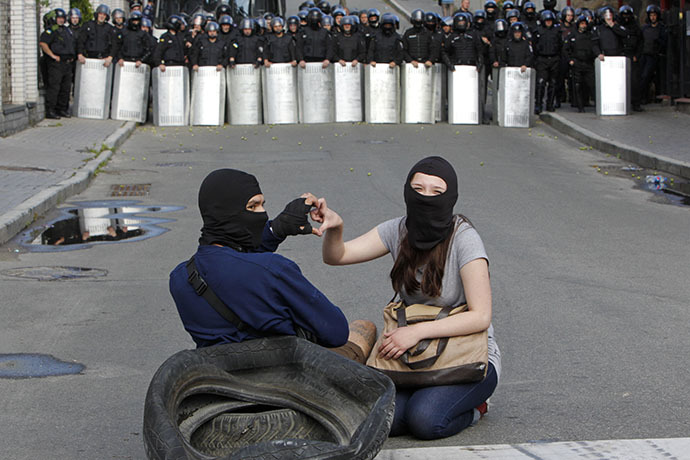
Activists of pro-Ukrainian radical youth group pose in a front of riot police outside Consulate department of Russian embassy in Kiev June 22, 2014. (Reuters / Valentyn Ogirenko)
Brasilien, Geldfußball-WM 2014. Wer Brasiliens beliebtesten WM-Stadiongesang erfand. „Eu sou brasileiro, com muito orgulho, com muito amor!“
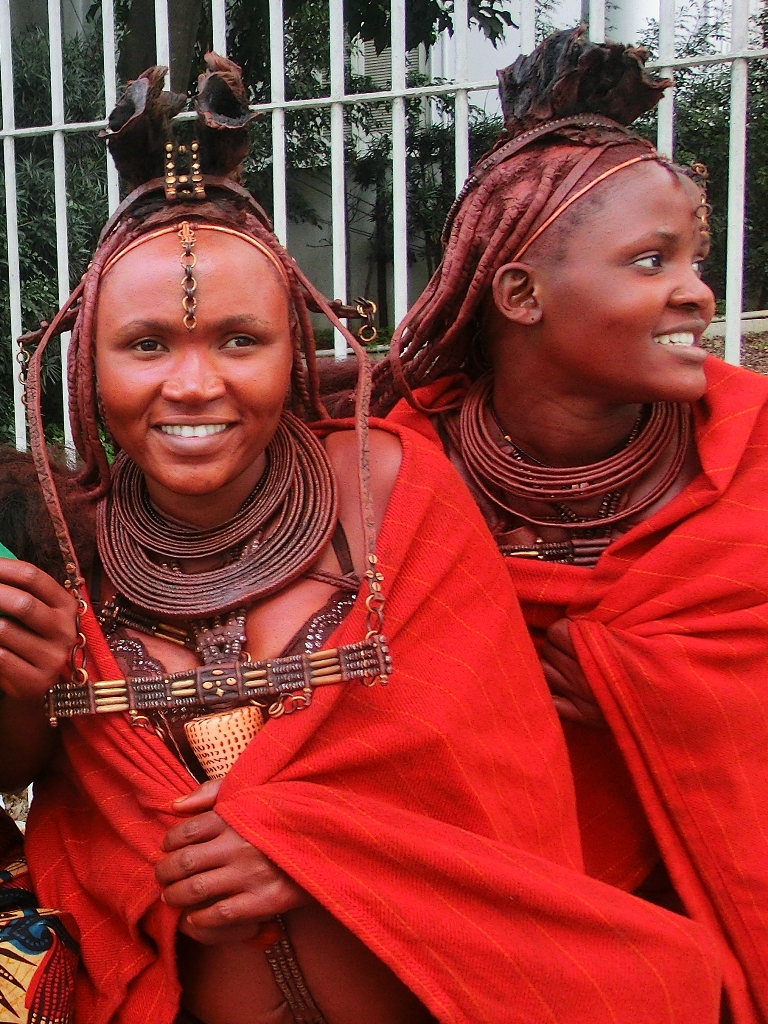
WM-Gäste aus Namibia.
Die deutsche Bundeskanzlerin Angela Merkel war bereits zum Eröffnungsspiel der deutschen Mannschaft in Brasilien: http://www.hart-brasilientexte.de/2014/06/16/deutsche-bundeskanzlerin-angela-merkel-reist-zur-wm-2014-nach-brasilien-trotz-gravierender-menschenrechtslage-bei-treffen-mit-staatschefin-dilma-rousseff-in-brasilia-waren-schwere-menschenrechtsve/
Warum Lula in Ländern wie Deutschland viele Sympathisanten eines bestimmten politischen Spektrums hat – Lula war Informant der Diktatur-Geheimpolizei Dops, laut neuem Buch: http://www.hart-brasilientexte.de/2014/02/12/brasilien-die-folterdiktatur-lula-und-die-arbeiterpartei-pt-rufmord-ein-kapitalverbrechen-buch557-seiten-mit-schweren-vorwurfen-gegen-lula-macht-schlagzeilen/
Olympische Winterspiele in Sotschi – und Fußball-WM in Brasilien 2014 – die Tricks von Propaganda und Medienmanipulation. Welche Argumente gegen die „Putin-Spiele“ ins Feld geführt wurden – und im Falle der Fußball-WM gänzlich fehlen…Kuriose oberflächliche Alibi-Kritik in deutschsprachigen Ländern.
http://www.swissinfo.ch/ger/gesellschaft/Menschenrechte_im_Fokus_der_Putin-Spiele.html?cid=37739636
Menschenrechte im Fokus der „Putin-Spiele“(swissinfo)
Was alles fehlt:
“Folter ohne Ende”: http://www.hart-brasilientexte.de/2009/12/12/folter-ohne-ende-tortura-sem-fim-brasiliens-soziologiezeitschrift-sociologia-uber-folter-unter-der-lula-regierung/
Ausriß: Zu Tode gesteinigter Homosexueller in Brasilien, laut Landesmedien. (Stands in Ihrem Lieblingsmedium?) Interessanterweise schweigen Mitteleuropas tonangebende Medien weiterhin zur Lage der Homosexuellen in Brasilien, zur steigenden Zahl von “Haßverbrechen” gegen Schwule.
Außenminister Guido Westerwelle in Sao Paulo: ”Unsere Partnerschaft gründet sich auf ein solides Fundament: Auf gemeinsame Werte und eine enge kulturelle Verbundenheit. Wir teilen die gleichen Vorstellungen von der Freiheit und Würde des Einzelnen, von Demokratie, Rechtsstaatlichkeit und sozialer Marktwirtschaft, von Multilateralismus und der Geltung des Völkerrechts.”
Deutsche Medien weisen zwar darauf hin, daß die Zahl der Protest-Teilnehmer deutlich geringer geworden ist, nennen indessen nicht die Methoden zur Paralysierung von Protestpotential in Brasilien, darunter die perfide Slum-Diktatur, zu der sogar vom organisierten Verbrechen verhängte abendliche und nächtliche Ausgangssperren gehören: http://www.hart-brasilientexte.de/2008/02/15/wem-nutzen-banditendiktatur-und-immer-mehr-no-go-areas/
Brasilien, Geldfußball-WM 2014, Systemkritikerproteste. Weiter innenpolitische Aufregung nach der Attacke auf ein Autohaus mit teuren deutschen Import-Mercedes-Luxuswagen in Sao Paulo. Gegenseitige Vorwürfe von Teilstaatsgouverneur und Sicherheitsbehörden sowie Organisatoren der Straßendemonstration.
Wie brasilianische Demonstrationsteilnehmer berichteten, fielen mehrere Merkwürdigkeiten nahezu jedermann auf. So war selbst von den Medien mitgeteilt worden, daß die Endkundgebung der Anti-WM-Demonstration in unmittelbarer Nähe des Mercedes-Autohauses stattfinden würde. Als der Demonstrationszug dort ankam, war das Autohaus hell erleuchtet, indessen entgegen landesüblichen Gepflogenheiten trotz der gut sichtbar ausgestellten Luxuskarossen völlig ohne Wachpersonal. Als einzelne Demonstrationsteilnehmer durch den Autohaus-Zaun auf das Gelände vordrangen, wurde offenbar keines der sonst üblichen Warn-und Alarmsignale ausgelöst. Während wie angekündigt, auf der vorbeiführenden Stadtautobahn ein Fest mit Fußballturnier stattfand, reichlich Zeit verging, ließen sich weder Wachpersonal noch Polizei oder Munizipalgarde an dem Autohaus blicken – auch vom kreisenden Polizeihubschrauber aus waren die Sicherheitsbehörden genau über die Vorgänge informiert. Zudem befand sich nur einige hundert Meter entfernt ein sehr großes Kontingent von Spezialeinheiten der Militärpolizei, das indessen ebenfalls nicht zu dem Autohaus vorrückte, um Sachbeschädigungen zu vermeiden. Aus Sicht von brasilianischen Demonstrationsteilnehmern mußten sich einige radikaler gesinnte Personen angesichts dieser kuriosen Situation geradezu eingeladen fühlen, Steine auf das Autohaus zu werfen, später gar dort einzudringen und in einer Blitzaktion Wagen zu beschädigen. Erst als alle Demonstrationsteilnehmer längst abgezogen waren, kamen die Polizei-Spezialeinheiten aus einer Seitenstraße zu dem Autohaus.
In in-und ausländischen Medien wurde der tatsächliche Ablauf der Geschehnisse um die Anti-WM-Demonstration nicht geschildert.
Desaster PKW – Pritzker-Preisträger Paulo Mendes da Rocha: http://www.hart-brasilientexte.de/2009/10/10/paulo-mendes-da-rocha-sao-paulo-pritzker-preistrager-warner-aus-der-betonwuste-gesichter-brasiliens/
Deutsche Medien weisen zwar darauf hin, daß die Zahl der Protest-Teilnehmer deutlich geringer geworden ist, nennen indessen nicht die Methoden zur Paralysierung von Protestpotential in Brasilien, darunter die perfide Slum-Diktatur, zu der sogar vom organisierten Verbrechen verhängte abendliche und nächtliche Ausgangssperren gehören: http://www.hart-brasilientexte.de/2008/02/15/wem-nutzen-banditendiktatur-und-immer-mehr-no-go-areas/
Brasiliens effiziente Tränengas-und Blendgranaten, viel Export in Diktaturen: http://www.hart-brasilientexte.de/2014/06/23/brasilien-geldfusball-wm-2014-repressing-world-cup-protests-%E2%80%94-a-booming-business-for-brazil-commondreams/
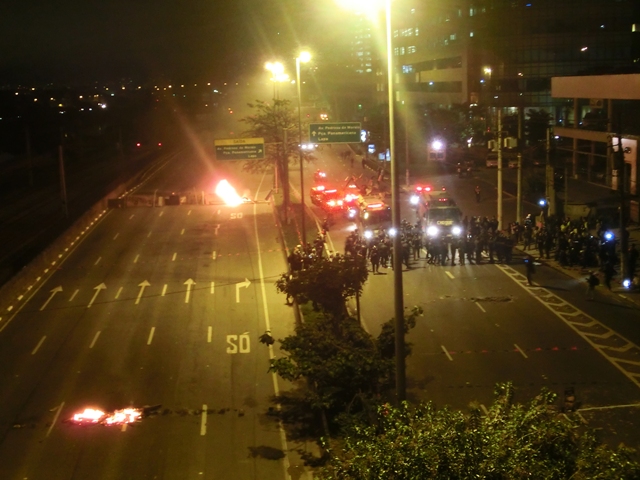
Spezialeinheiten der Militärpolizei kommen erst zum Ort des Kundgebungsendes am Mercedes-Autohaus, als die Demonstranten längst von dannen sind. Die Menge an Personen rechts auf dem Bürgersteig neben den Beamten – alles in-und ausländische Journalisten und Kameraleute.
Brasilien, Geldfußball-WM 2014, Repression. Offener Brief an die Bevölkerung, gegen Kriminalisierung der Sozialbewegungen, unterzeichnet von der Kommission für Gerechtigkeit und Frieden(Erzdiözese Sao Paulo, geleitet vom deutschstämmigen Kardinal Odilo Scherer) und der Anti-Folter Organisation „Tortura nunca mais“(Nie mehr Folter). „Heute haben wir eine Zivildiktatur“. Bischof Erwin Kräutler, Altamira.
CARTA ABERTA À POPULAÇÃO – CONTRA A CRIMINALIZAÇÃO DOS MOVIMENTOS SOCIAIS
Comissão de Justiça e Paz: Grupo Tortura Nunca Mais e Pastorai Sociais
No dia 11 de junho, no auditório da APEOESP, na Praça da República, 282, no centro da cidade de São Paulo, das 18 às 21 horas, houve um encontro de defesa dos Direitos Humanos, contra a violência praticada aos moradores da Região Metropolitana de São Paulo, contra repressão policial, pelo direito de manifestação e em defesa do Estado de Direito. Dessa reunião, entre outras coisas, saiu uma Carta Aberta à População e Contra a Criminalização dos Movimentos Sociais… veja abaixo e repasse, por favor.
CARTA ABERTA À POPULAÇÃO
O Movimento Contra a Criminalização dos Movimentos Sociais, que agrega várias entidades e organizações de luta pela defesa dos direitos humanos, vem a público para denunciar os constantes desrespeitos aos direitos humanos no Brasil daqueles que se colocam contra as graves injustiças sociais no Brasil, notadamente das pessoas oriundas dos movimentos sociais ou, quando não, contra os pobres em si.
A origem dessa sistemática violação dos Direitos Humanos reside no aparelhamento do Estado brasileiro para a defesa de interesses de poderosos grupos econômicos, levando ao estabelecimento de uma mentalidade negativa de tudo que possa de alguma forma, questionar o “status quo” desses beneficiados pelo sistema.
Os movimentos sociais, como forma legítima de intervenção política dos excluídos da riqueza nacional, dessa forma, vêm sendo vítimas de criminalização, notadamente quando da realização de manifestações pacíficas, duramente reprimidas, justamente por se colocarem como “inimigos internos” dessa situação da distribuição da riqueza gerada socialmente, mas apropriada por pequenos grupos.
É impossível não se perceber que esse aparelhamento do Estado leva a atitudes de muitos de seus agentes, sejam nas forças policiais ou na esfera administrativa, de efetivo de desrespeito aos direitos humanos com absoluta sensação de impunidade, na medida em que sentem que os cidadãos pobres não são destinatários da ação estatal, mas sim, repita-se, seus inimigos.
Nesse sentido, é de se constatar que a obsessão de confundir presença do Estado com intervenção meramente policial leva a uma situação anacrônica: o crescimento vertiginoso da violência e, consequentemente, das práticas de crimes e a disseminação de áreas de anomia, onde a presença de aparelhos do Estado como escolas, hospitais, equipamentos urbanos, etc. é igual a zero e onde grupos criminosos exercem o poder de fato. O grave é quando se nota que agentes do Estado, notadamente os policiais, passam a integrar esses grupos criminosos ou, mesmo quando aparentemente se opõem a esses grupos, criam “milícias” onde a violência e a prática rotineira de crimes contra os pobres apenas aumenta a sensação de insegurança.
Essa situação é tão grave que mesmo a execução, por um desses grupos na cidade de São Paulo, do Coronel PM José Hermínio Rodrigues, então comandante do policiamento na Zona Norte de São Paulo, que tinha noticiado que combateria esses grupos, não foi apurada até a presente data. Se nem na morte de um Comandante da PM não houve apuração dos fatos, o que se dirá dos inúmeros jovens pobres e negros da periferia, vítimas de contínuos homicídios, quando não de chacinas.
O mesmo acontece com a população de rua, continuamente vítima de agentes do Estado (notadamente dos Municípios e dos Estados) que são vítimas de medidas de higienização com transferência forçada de lugares de pousada. Crianças e adolescentes das ruas ficam a mercê da violência travestida de assistência social. Da mesma forma que se observa a criminalização dos movimentos sociais, também se observa uma constante criminalização da população pobre, sem recursos, sem ter onde morar e a quem recorrer quando necessário.
O Movimento Contra a Criminalização dos Movimentos Sociais manifesta, assim, o seu repúdio a intervenção estatal de repressão aos despossuídos, inclusive aos movimentos sociais, quando deveriam, tanto as autoridades federal, estaduais e municipais, ser agentes da instituição de um Estado de Direito Democrático, onde os Direitos Humanos sejam respeitados como inerentes a todos os seres humanos.
Comissão Justiça e Paz da Arquidiocese de São Paulo
Grupo Tortura Nunca Mais

Brasiliens populärer Menschenrechtspriester Julio Lancelotti aus der Erzdiözese Sao Paulo – bei nahezu allen Anti-WM-Straßenprotesten dabei. “Der Staat will mit aller Macht Proteste verhindern, ein falsches Image erzeugen – doch das gelingt nicht. Die Repression fällt jedermann auf. Nicht einmal während der Militärdiktatur wurde die Repressionsmacht des Staates so massiv betont, so gut sichtbar herausgestellt. Ich stimme mit Bischof Erwin Kräutler von Altamira überein – wir haben eine Zivildiktatur . Es handelt sich um eine kapitalistische, wirtschaftliche Diktatur.” Auf Website-Anfrage kritisierte Padre Lancelotti zudem sehr scharf die großen tonangebenden brasilianischen Medien und deren Berichterstattung über Systemkritikerproteste:”Diese Medien sind ehrlos, sie verstecken Fakten, minimieren, kriminalisieren.” Laut Lancelotti sind auch Menschenrechtsaktivisten der katholischen Kirche derzeit von der Repression während der WM betroffen. “Man setzt generell auf starke Einschüchterung.” Besonders betroffen seien davon die Obdachlosen in Megastädten wie Sao Paulo:”Man vertreibt die Straßenbewohner vor allem durch Drohungen:Besser für dich, du verschwindest von hier. Doch man geht auch per Militärpolizei mit Tränengasbomben und Blendgranaten gegen Obdachlose vor, um sie von bestimmten Schlafplätzen, darunter Brücken, zu vertreiben. Gegen diese Repression hat das Obdachlosen-Vikariat der Erzdiözese Sao Paulos beim brasilianischen Innenministerium Anzeige erstattet. Wir sind jetzt zur WM rund um die Uhr im Einsatz, beobachten die Situation der Obdachlosen auf den Straßen, nehmen Anzeigen entgegen, betreiben Nachforschungen.”
Bemerkenswert – die Voraussagen der katholischen Kirche in Bezug auf WM und Menschenrechte haben sich bestätigt.
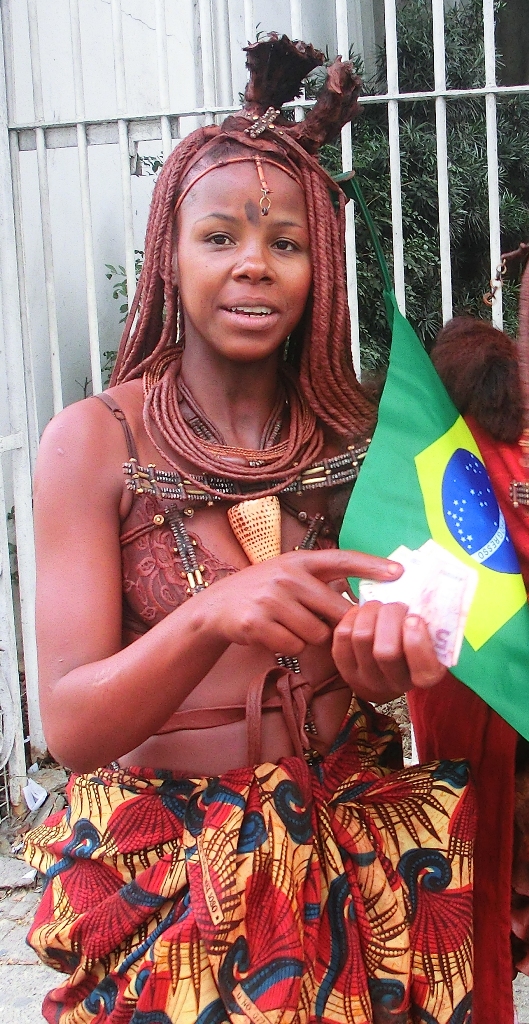
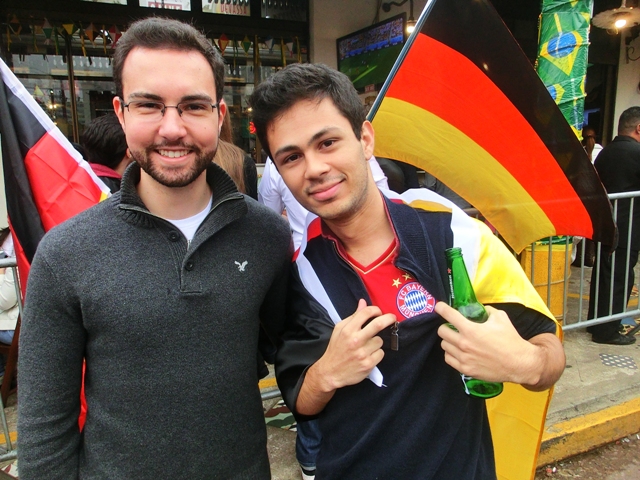
Brasilien, WM-Gäste aus Namibia in Sao Paulo. WM-Spielorte mit ungewöhnlich starker Polizeipräzenz dort, wo ausländische Fans zirkulieren. Brasiliens Medien berichten derzeit deutlich weniger über alltägliche Verbrechen, verzichten auf Fotos. Positionierungen der zahlreichen WM-kritischen NGO und politischen Gruppierungen unerwähnt.
Brasilien, Geldfußball-WM 2014, Aktionen der Sozialbewegungen. Weitere Baulandbesetzung in Sao Paulo durch Bewegung wohnungsloser Arbeiter(MTST).
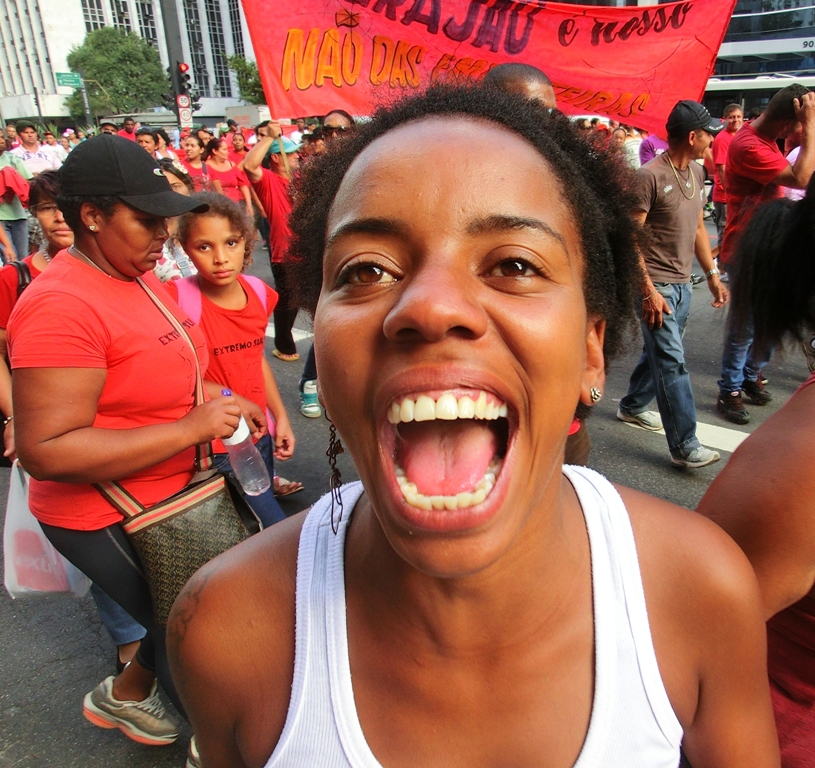
MTST-Demonstration in Sao Paulo 2014.
NEU: Fotoserie Gesichter Brasiliens
Links zum Thema Ukraine
Fotostrecken Wasserfälle Iguacu und Karneval 2008
 '
'

interessante Links
Seiten
Ressorts
- Kultur (6.975)
- Naturschutz (1.101)
- Politik (12.729)
Suchen
RSS-Feeds
Verwaltung